




What are the torque specifications for an air throttle valve?
 Dec 25, 2025|
 Torque specifications are critical considerations when dealing with an air throttle valve. As a supplier of [link text="Air Throttle Valve" url="/air-hose-fittings/pneumatic-throttle-valve/air-throttle-valve.html"]Air Throttle Valves[/link], understanding these specifications is not just about ensuring the correct installation of the valve but also about guaranteeing its optimal performance, longevity, and most importantly, safety.
Understanding Torque in the Context of Air Throttle Valves
Torque, in mechanical terms, is the rotational force applied to an object. When it comes to an air throttle valve, torque is used during the installation process to tighten the valve's components, such as bolts or nuts, to the correct level. This tightness is crucial as it directly impacts the valve's functionality.
If the torque applied is too low, the valve components may become loose over time. This can lead to air leakage, which not only reduces the efficiency of the pneumatic system in which the valve is installed but can also cause erratic valve operation. For example, in an industrial manufacturing setting where precise control of air flow is necessary for a production process, a leaking air throttle valve can result in inconsistent product quality and even production downtime.
Conversely, if the torque is too high, it can cause damage to the valve or its mating surfaces. Over - tightening can lead to stripped threads, cracked valve bodies, or distorted gaskets. These issues can also lead to air leakage and, in severe cases, may render the valve completely inoperable.
Factors Affecting Torque Specifications
Several factors influence the appropriate torque specifications for an air throttle valve.

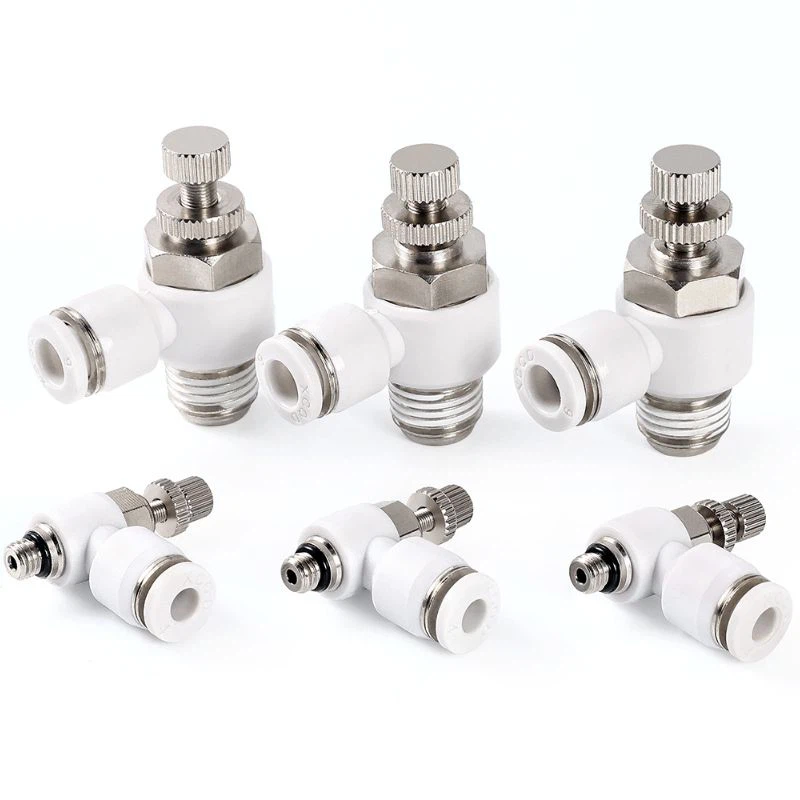
- Material of the Valve and Fasteners: Different materials have varying strength and elasticity characteristics. For instance, a valve made of aluminum will require different torque values compared to a valve made of stainless steel. Aluminum is softer and more prone to deformation, so less torque is typically needed to avoid damage. Similarly, the material of the fasteners used (such as bolts or nuts) also plays a role. Steel fasteners can generally withstand higher torque than brass ones.
- Size and Design of the Valve: Larger valves usually require more torque to ensure a proper seal. The design of the valve, including the number and size of the mounting holes and the sealing mechanism, also affects the torque requirements. A valve with a more complex sealing design may need precise torque application to achieve a leak - free seal.
- Operating Conditions: The pressure and temperature of the air system in which the valve operates are important considerations. In high - pressure systems, more torque may be required to prevent the valve from coming loose under the forces exerted by the pressurized air. High - temperature environments can cause materials to expand or contract, which may also affect the torque requirements.
Determining the Correct Torque Specifications
To determine the correct torque specifications for an air throttle valve, several methods can be employed.
- Manufacturer's Recommendations: The most reliable source of torque information is the valve manufacturer. As a [link text="Air Throttle Valve" url="/air-hose-fittings/pneumatic-throttle-valve/air-throttle-valve.html"]Air Throttle Valve[/link] supplier, we provide detailed documentation with each valve we sell, including the recommended torque values for installation. These values are based on extensive testing and engineering calculations to ensure the proper functioning and safety of the valve.
- Torque Tables: General torque tables can be used as a reference, especially when the exact manufacturer's specifications are not available. These tables provide approximate torque values based on the size and material of the fasteners. However, it's important to note that these values should be used with caution as they may not account for all the specific characteristics of a particular air throttle valve.
- Testing and Experience: In some cases, especially in unique or custom - designed systems, testing may be required to determine the optimal torque. Experienced technicians can also rely on their past experience with similar valves and systems to make an educated estimate of the appropriate torque.
Importance of Following Torque Specifications
Adhering to the correct torque specifications is of utmost importance for several reasons.
- Safety: A properly torqued air throttle valve reduces the risk of leaks and component failure. In a pneumatic system, a leak can cause sudden depressurization, which can be dangerous to personnel and equipment. For example, in a vehicle's engine air intake system, a leaking throttle valve can lead to improper fuel - air mixture, which may cause engine misfires or even stalling, potentially endangering the driver and passengers.
- Performance: Correct torque ensures that the valve operates smoothly and efficiently. It allows for accurate control of the air flow, which is essential for the proper functioning of the entire pneumatic system. Whether it's in a small consumer product or a large industrial machine, consistent and precise air flow control is crucial for performance.
- Longevity: By avoiding over - or under - torquing, the valve and its components are less likely to experience premature wear and tear. This extends the lifespan of the valve, reducing maintenance costs and downtime.
Different Types of Air Throttle Valves and Their Torque Considerations
There are different types of air throttle valves, such as [link text="Pneumatic Throttle Valve Function" url="/air-hose-fittings/pneumatic-throttle-valve/pneumatic-throttle-valve-function.html"]Pneumatic Throttle Valves[/link] and [link text="Pneumatic Silencer Throttle Valve" url="/air-hose-fittings/pneumatic-throttle-valve/pneumatic-silencer-throttle-valve.html"]Pneumatic Silencer Throttle Valves[/link], each with its own torque considerations.
- Pneumatic Throttle Valves: These valves are commonly used to control the flow of air in pneumatic systems. They often have a simple design with a few mounting points. The torque specifications for these valves are typically based on the size of the valve body and the type of fasteners used. For example, a small - sized pneumatic throttle valve used in a laboratory instrument may require a relatively low torque, while a larger one used in an industrial pneumatic conveyor system may need significantly higher torque.
- Pneumatic Silencer Throttle Valves: In addition to controlling air flow, these valves also have a silencing function. The design of the silencer component may add complexity to the torque requirements. The silencer may need to be properly seated and tightened to ensure effective noise reduction without affecting the valve's air - flow control capabilities. Special attention should be paid to the torque applied to the fasteners that hold the silencer in place.
Tools for Applying Correct Torque
To apply the correct torque during the installation of an air throttle valve, several tools are available.
- Torque Wrenches: These are the most commonly used tools for achieving accurate torque. They come in different types, such as click - type, beam - type, and digital torque wrenches. Click - type torque wrenches are popular as they provide a clear indication (a click sound) when the preset torque value is reached.
- Torque Screwdrivers: For smaller valves or components with smaller fasteners, torque screwdrivers are used. They work on a similar principle as torque wrenches but are designed for more precise and delicate applications.
Best Practices for Torque Application
When applying torque to an air throttle valve, the following best practices should be followed.
- Clean and Inspect Surfaces: Before installation, the mating surfaces of the valve and the mounting area should be cleaned to remove any dirt, debris, or rust. This ensures a proper seal and helps prevent damage to the valve or the fasteners. The fasteners should also be inspected for any defects.
- Apply Torque Gradually: Instead of tightening the fasteners all at once to the full torque value, it's recommended to apply the torque gradually in stages. This helps to distribute the force evenly and reduces the risk of over - tightening or distortion.
- Check for Leaks: After installing the valve and applying the correct torque, a leak test should be performed. This can be done using a suitable leak - detection method, such as a soap - bubble test or a pressure - decay test. If a leak is detected, the torque should be re - checked and adjusted if necessary.
Conclusion and Invitation to Contact
In conclusion, understanding and adhering to the correct torque specifications for an air throttle valve is essential for its safe, efficient, and long - lasting operation. As a leading supplier of [link text="Air Throttle Valve" url="/air-hose-fittings/pneumatic-throttle-valve/air-throttle-valve.html"]Air Throttle Valves[/link], we are committed to providing high - quality products along with comprehensive technical support. If you are in the market for air throttle valves or have any questions regarding torque specifications or valve installation, we encourage you to reach out to us for a detailed discussion and to explore our product offerings.
References
- Mechanical Engineering Handbook, various editions.
- Valve Manufacturer's Technical Documentation.
- Industry Standards for Pneumatic Systems.