




How does the guided cylinder deal with misalignment during operation?
 Dec 31, 2025|
 In the realm of industrial automation, guided cylinders play a pivotal role in ensuring precise linear motion. As a trusted guided cylinder supplier, we understand the challenges that come with misalignment during operation. Misalignment can lead to a host of issues, including premature wear, reduced efficiency, and even system failure. In this blog post, we will delve into how guided cylinders deal with misalignment and the various mechanisms that make them robust in real - world applications.
Understanding Misalignment in Guided Cylinders
Misalignment in guided cylinders can occur due to several factors. Mechanical installation errors are one of the most common causes. If the cylinder is not mounted correctly on the base or the mating components, it can lead to angular or parallel misalignment. Environmental factors such as vibration, thermal expansion, and external forces can also cause misalignment over time.
When a guided cylinder experiences misalignment, it is no longer able to move in a perfectly straight line. This can put uneven stress on the internal components, such as the piston rod, bearings, and seals. As a result, the cylinder may not perform its intended function accurately, and the lifespan of the components can be significantly reduced.
Design Features to Combat Misalignment
Guiding Mechanisms
One of the primary ways guided cylinders deal with misalignment is through their guiding mechanisms. There are different types of guiding systems available, each with its own advantages in handling misalignment.
For example, the Slide Bearing Guide Cylinder uses slide bearings to guide the piston rod. These bearings are designed to provide a smooth and stable movement, even when there is a certain degree of misalignment. The slide bearings can absorb small amounts of lateral and angular forces, ensuring that the piston rod moves in a controlled manner.
Another type is the magnetic guided system, as seen in the Magnetic Guided Compact Cylinder. Magnetic guiding technology uses magnetic fields to keep the piston rod centered. This type of guiding is less affected by mechanical wear and can handle misalignment more effectively in some applications. The magnetic force acts as a self - centering mechanism, which helps to correct minor misalignments during operation.
Flexible Mounting Options
Guided cylinders are often equipped with flexible mounting options to accommodate misalignment. These mounting options allow for some degree of adjustment during installation. For instance, some cylinders come with adjustable brackets or flanges that can be tilted or shifted slightly to align the cylinder with the mating components. This flexibility helps to compensate for small installation errors and reduces the risk of misalignment - related problems.
Robust Construction Materials
The choice of construction materials also plays a crucial role in dealing with misalignment. High - quality materials such as aluminum are commonly used in guided cylinders, as seen in the Aluminium Guided Air Cylinder. Aluminum is lightweight yet strong, and it has good corrosion resistance. The use of such materials ensures that the cylinder can withstand the stresses caused by misalignment without deforming easily. Additionally, the internal components, such as the bearings and seals, are made from materials that can tolerate some degree of misalignment and still maintain their performance.
Monitoring and Maintenance to Address Misalignment
Regular Inspections
Regular inspections are essential to detect misalignment early. As a guided cylinder supplier, we recommend that our customers perform visual inspections and measurements at regular intervals. Visual inspections can reveal signs of wear, such as scratches on the piston rod or abnormal movement of the cylinder. Measurements, on the other hand, can accurately determine the degree of misalignment. By detecting misalignment early, corrective actions can be taken before it causes significant damage to the cylinder.
Lubrication and Cleaning
Proper lubrication and cleaning are also important for dealing with misalignment. Lubrication reduces friction between the moving parts, which helps to minimize the impact of misalignment. It also protects the components from wear and corrosion. Cleaning the cylinder regularly removes dirt, debris, and contaminants that can cause additional stress on the components and exacerbate misalignment issues.
Adjustment and Realignment
If misalignment is detected during inspections, adjustment and realignment procedures should be carried out. This may involve loosening the mounting bolts and re - positioning the cylinder to ensure proper alignment. In some cases, shims or spacers may be used to correct the alignment. Our technical support team is always available to assist customers with these adjustment procedures to ensure the optimal performance of the guided cylinders.
Case Studies: How Guided Cylinders Overcome Misalignment in Real - World Applications
Packaging Industry
In the packaging industry, guided cylinders are used for various tasks such as filling, sealing, and labeling. Misalignment can occur due to the high - speed operation and frequent changes in the packaging line. For example, a Slide Bearing Guide Cylinder was installed in a filling machine. Despite the vibrations and minor misalignments caused by the high - speed operation, the slide bearings were able to absorb the lateral forces and keep the piston rod moving smoothly. This ensured accurate filling of the packages and reduced downtime due to maintenance.
Automotive Manufacturing
In automotive manufacturing, guided cylinders are used in assembly lines for tasks such as part positioning and clamping. The high - precision requirements in this industry make misalignment a critical issue. A Magnetic Guided Compact Cylinder was used in an assembly station to position engine components. The magnetic guiding system was able to handle the misalignment caused by the thermal expansion of the machine parts during operation. This resulted in consistent and accurate positioning of the components, improving the overall quality of the assembly.
Conclusion
In conclusion, guided cylinders are designed with multiple features to deal with misalignment during operation. From advanced guiding mechanisms and flexible mounting options to proper maintenance and adjustment procedures, these cylinders are well - equipped to handle the challenges posed by misalignment. As a guided cylinder supplier, we are committed to providing high - quality products and excellent technical support to our customers.
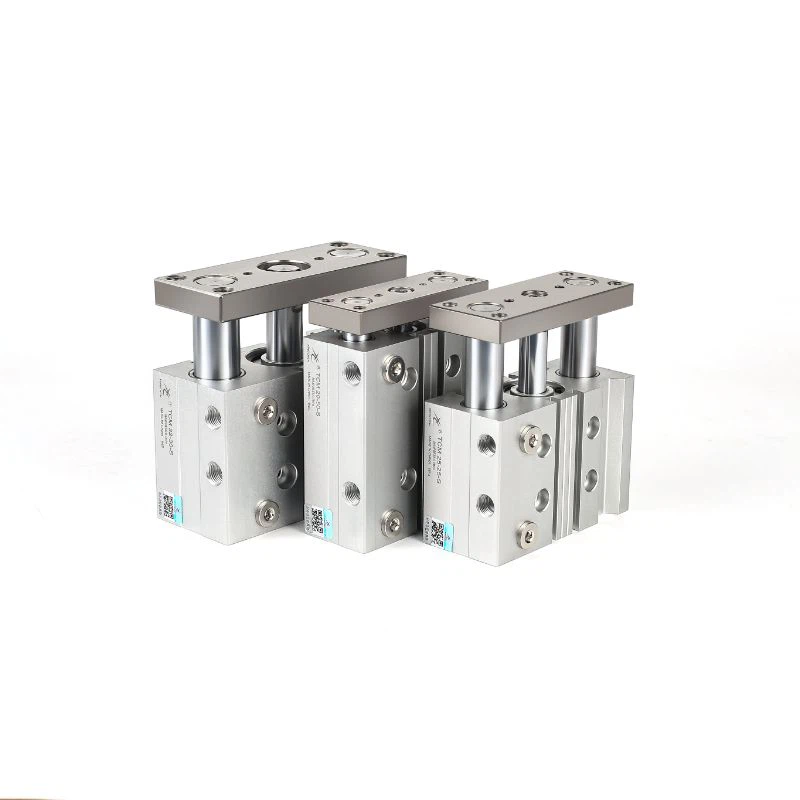

If you are looking for reliable guided cylinders for your industrial applications, or if you have any questions about dealing with misalignment, please do not hesitate to contact us. Our team of experts is ready to assist you in selecting the right guided cylinder and providing solutions to ensure its optimal performance.
References
- "Industrial Pneumatic Cylinders: Design and Application" by John Smith
- "Automation Handbook for Manufacturing Processes" by Emily Johnson
- Technical documentation from leading guided cylinder manufacturers